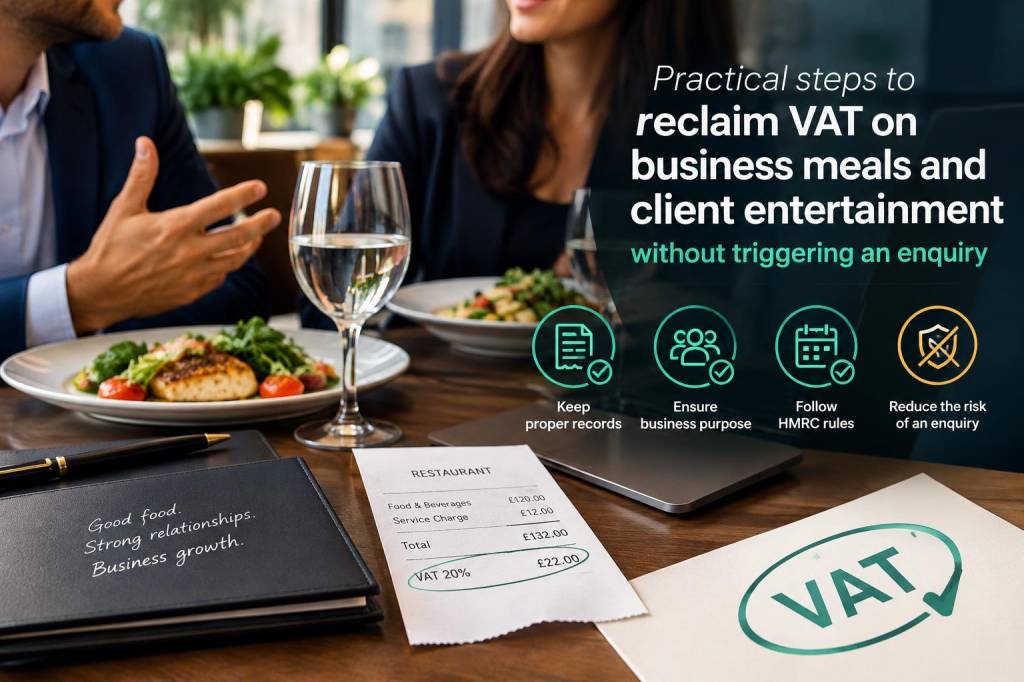
I often get asked by small business owners whether they can reclaim VAT on client lunches, dinners or hospitality. The short answer is: usually not for “entertainment” of clients, but there are perfectly legitimate, documented ways to reclaim VAT on some business meals without making your VAT return look like an open invitation for an HMRC enquiry. Below I walk through practical steps, clear examples and record-keeping tips I use with clients so you can reclaim what’s allowable and avoid unnecessary risk.
Understand the basic rule before you try anything clever
HMRC’s starting position is simple: input VAT on business entertainment of customers and clients is normally not recoverable. That covers most client lunches, hospitality and social events where the primary purpose is to entertain a customer or maintain goodwill.
However, VAT is recoverable in specific circumstances — typically where the supply is to staff, where it’s part of a taxable business activity (not entertainment), or where the VAT charged relates to a separate supply that isn’t entertainment (for example, a conference ticket that includes a meal where the meal is incidental to the taxable supply).
Practical checklist: Does this situation allow VAT recovery?
- Staff-only events: VAT can usually be reclaimed for food and drink provided exclusively to staff (e.g. staff training lunch, staff Christmas party where no clients attend). Keep attendee lists to prove no customers were present.
- Business travel and subsistence: VAT on meals incurred as part of overnight business travel or necessary subsistence during business duties can be reclaimed — provide travel bookings and reasons.
- Working lunches: If the meal is provided as part of doing business (e.g. team working through a project at the office where people are actively working), you can often reclaim VAT because it’s not “entertainment”. Document the business purpose and working status.
- Conferences and seminars: When a taxable supply (conference ticket) includes food, VAT may be recoverable if the primary supply is the event and the food is incidental. Get an itemised invoice or supplier confirmation.
- Client entertainment: Generally NOT recoverable. Where a supplier mixes client entertainment and other supplies on a single invoice, ask for itemisation and apportion VAT properly.
- Flat Rate Scheme: If you’re on the VAT Flat Rate Scheme, you generally cannot reclaim VAT on purchases (except on certain capital items over £2,000). Check your scheme rules before attempting to reclaim.
Document the business purpose — the single most important control
HMRC looks for a clear, contemporaneous explanation of why the meal was incurred. I recommend the following minimum evidence for each claim you want to support:
- Itemised supplier invoice showing VAT amount.
- Date, location and supplier name.
- Names and roles of attendees (mark which are employees and which are clients).
- A short note of the business purpose (e.g. “strategy meeting to agree Q3 product launch; attendees were working through product roadmap and actioned tasks during the meal”).
- Copies of bookings or travel tickets for subsistence claims (if travel-related).
How to handle mixed invoices and apportionment
Suppliers sometimes issue a single bill that covers both recoverable and non-recoverable items (e.g. a meeting room hire + client lunch). Don’t simply claim the VAT against the whole invoice. Instead:
- Ask the supplier for an itemised VAT invoice that separates catering from other services. Most businesses are used to this and will provide it.
- If itemisation isn’t possible, make a reasonable apportionment and keep a clear calculation showing how you split the VAT between recoverable and non-recoverable elements.
- Record the rationale for the apportionment (e.g. menu prices for per-head cost, room hire proportion by time or floor space).
Keep your claims modest and consistent to avoid raising flags
Large, unusual or repeated VAT reclaims for client hospitality can trigger enquiries. To reduce that risk:
- Only reclaim VAT where the rules clearly allow it and supporting evidence is strong.
- Avoid consistently high-value or frequent “working lunch” claims unless the business genuinely operates that way. Make sure your practice is defensible.
- Document internal policies (see below). A written hospitality policy that explains when VAT will be recovered helps if HMRC asks why you claimed VAT on certain meals.
Practical templates and wording you can use
When you’re recording the business purpose, a short standard phrasing is helpful. Examples I use with clients:
- “Working lunch to progress client project X — attendees were actively drafting deliverables and minutes were taken.”
- “Staff training lunch — attendees: A, B, C; training topic: end-of-year accounts and compliance; no client present.”
- “Conference attendance: full-day seminar on tax updates — lunch included as part of ticket (supplier itemised on invoice as part of taxable supply).”
Table: Quick reference — common scenarios
| Scenario | Recover VAT? | Key evidence needed |
|---|---|---|
| Staff-only lunch (training) | Yes | Attendee list, training agenda, invoice |
| Client lunch to build relationships | No | Don’t claim |
| Working lunch where staff are actively working | Often yes | Minutes, attendee list, invoice |
| Conference ticket including lunch | Often yes | Itemised invoice showing the taxable supply |
| Mixed invoice (room hire + catering for clients) | Partly — requires apportionment | Itemisation or reasoned apportionment |
Operational tips to make your life easier
- Use expense software (I recommend tools like Xero Expenses or Receipt Bank/Dext) to capture receipts and add notes immediately. Prompt digital records reduce ambiguity later.
- Train staff and contractors on the hospitality policy so that expense claims include the required information up front.
- Ask restaurants or caterers for VAT invoices. If they’re not VAT registered, you won’t have VAT to reclaim anyway — but that’s fine; just note it.
- Review VAT Flat Rate Scheme status before claiming. If you’re on the flat rate scheme, claiming purchase VAT is mostly not allowed.
When to involve a specialist
If you have a pattern of mixed-use events, frequent high-value hospitality, or you’re unsure whether a particular meal forms part of a taxable supply (conferences, trade shows, bundled tickets), get specialist advice. I often help clients draft defensible policies, review past claims before an HMRC compliance check and prepare the supporting pack HMRC will expect.
If you want, I can share a downloadable template for an internal hospitality policy and a simple expense note format that satisfies HMRC’s typical enquiries — tell me which you'd prefer and I’ll send it over.